
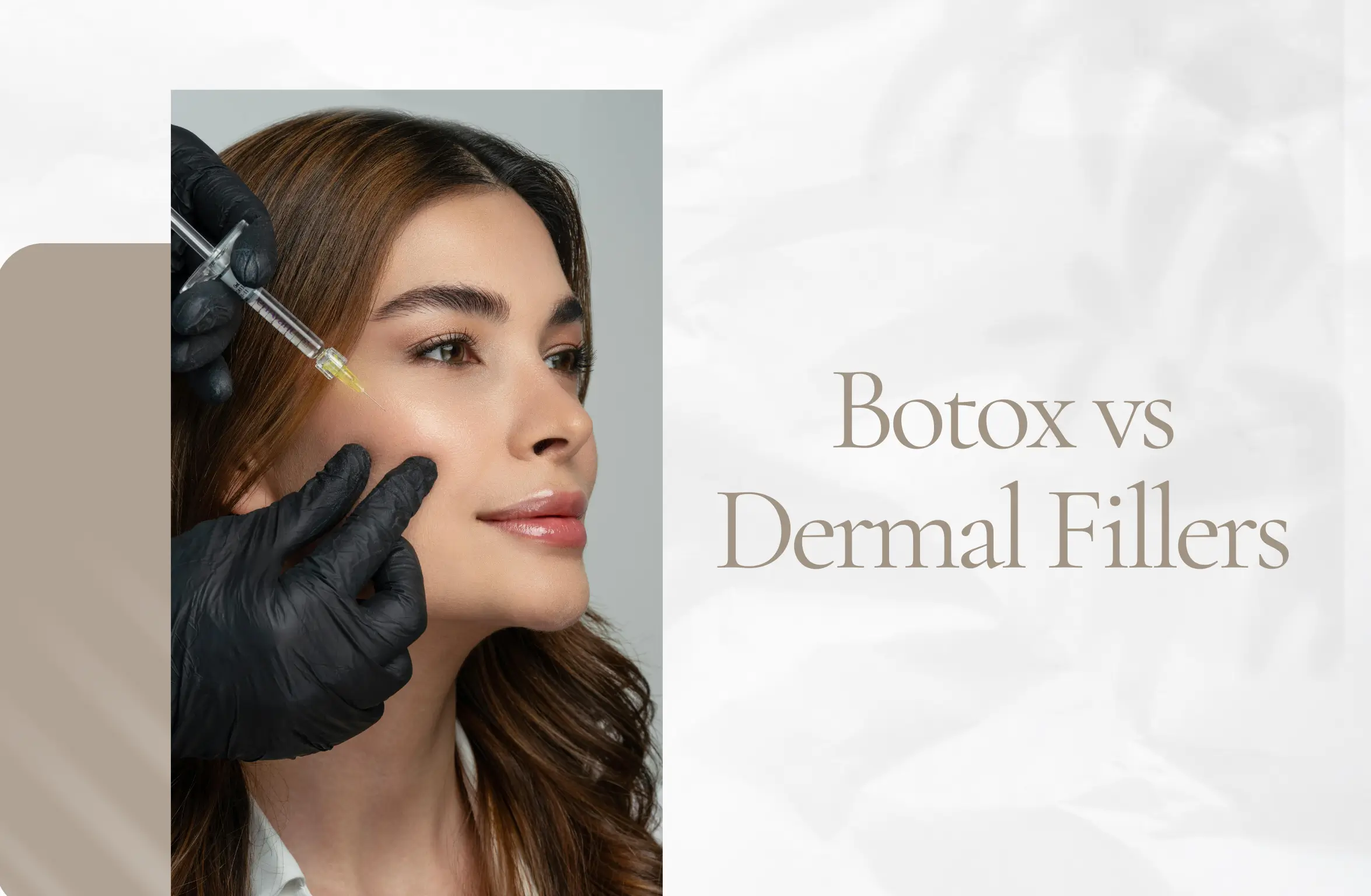
Botox and dermal fillers are two of the most common non-surgical aesthetic treatments offered at medical spas and aesthetic clinics. They are often mentioned together, frequently confused, and sometimes assumed to do the same thing. In reality, Botox and dermal fillers work in very different ways and address different aesthetic concerns.
Understanding the difference is essential for setting realistic expectations and choosing the right treatment for your goals.
This guide explains what Botox and dermal fillers actually do, why they are often misunderstood, and how to determine which option or combination is most appropriate for you.
Why Botox and Dermal Fillers Are Often Confused
Botox and dermal fillers are commonly grouped together because they share a few surface similarities:
- Both are injectable treatments
- Both are non-surgical
- Both are used for facial rejuvenation
- Both are performed in medical aesthetic settings
The confusion starts when these treatments are casually labeled as interchangeable or when all injectables are referred to as “Botox.” Social media, advertising, and word-of-mouth often oversimplify the differences, leading patients to expect volume from Botox or wrinkle reduction from fillers in areas where they are not effective.
This misunderstanding can result in hesitation, disappointment, or choosing a treatment that does not address the underlying concern.
What Botox Actually Does
How Botox Works
Botox is a neuromodulator. It works by temporarily relaxing specific facial muscles that contract during expression. When these muscles relax, the skin above them smooths, reducing the appearance of wrinkles caused by repeated movement.
Botox does not fill or add volume. Its effect is functional rather than structural.
What Botox Is Best Used For
Botox is most effective for dynamic wrinkles, which are lines that appear or deepen with facial movement. Common treatment areas include:
- Forehead lines
- Frown lines between the eyebrows (“11s”)
- Crow’s feet around the eyes
- Bunny lines on the nose
Botox is also commonly used as a preventative treatment. Reducing repetitive muscle movement early, it can slow the formation of deeper wrinkles over time.
What Botox Does Not Do
Botox does not:
- Add volume to the face
- Lift sagging tissue
- Replace lost facial structure
- Improve hollow areas
If volume loss or contour changes are the main concern, Botox alone will not produce the desired result.
What Dermal Fillers Actually Do
How Dermal Fillers Work
Dermal fillers are designed to restore or enhance volume. Most commonly used fillers are made from hyaluronic acid, a substance naturally found in the body that attracts and retains moisture.
When injected strategically, fillers support facial structure, improve contours, and soften wrinkles caused by volume loss rather than muscle movement.
What Dermal Fillers Are Best Used For
Dermal fillers are effective for concerns related to volume, shape, and facial balance. Common treatment areas include:
- Cheeks
- Lips
- Jawline
- Chin
- Under-eye hollows
- Nasolabial folds
Fillers can restore youthful proportions or enhance natural features without changing facial expression.
What Dermal Fillers Do Not Do
Dermal fillers do not:
- Relax facial muscles
- Prevent expression-based wrinkles
- Replace the effects of Botox in dynamic areas
Using fillers in areas where muscle movement is the primary cause of wrinkles can lead to unnatural results.
Botox vs Dermal Fillers: A Clear Comparison
Purpose
Botox reduces muscle movement. Dermal fillers restore or add volume.
How they work
Botox temporarily relaxes muscles. Fillers provide structural support under the skin.
Best for
Botox treats expression-related wrinkles. Fillers treat volume loss and contour changes.
Results timeline
Botox results appear gradually over several days. Filler results are visible immediately.
Longevity
Botox typically lasts 3–4 months. Fillers can last from 6 months to over a year, depending on the product and area.
Choosing the Right Treatment: A Simple Decision Framework
If Your Concern Is Movement-Related Wrinkles
Wrinkles that appear when you smile, frown, or raise your eyebrows are usually caused by muscle activity. In these cases, Botox is typically the primary treatment.
If Your Concern Is Volume Loss or Facial Structure
Hollowing, flattening, or changes in facial contour are signs of volume loss. Dermal fillers are usually the appropriate option for restoring balance and support.
When Botox and Fillers Are Used Together
In many cases, the most natural results come from using Botox and fillers together. Botox softens expression lines, while fillers restore structure. This combination allows for facial rejuvenation without overcorrecting any single area.
For example, relaxing the forehead with Botox while restoring cheek volume with filler can create a balanced, refreshed appearance rather than an overdone look.
Common Myths and Misunderstandings
“Botox will freeze my face.”
When administered correctly, Botox softens movement without eliminating expression.
“Fillers always look fake.”
Overfilled results are not caused by fillers themselves, but by excessive product or poor treatment planning.
“I’m too young or too old for injectables.”
Injectable treatments are not age-based. They are concern-based and anatomy-based.
Medically guided planning is essential to avoid these issues.
What a Proper Consultation Should Include
A high-quality aesthetic consultation should focus on education and individualized planning. It should include:
- Assessment of facial anatomy and movement
- Discussion of goals and expectations
- Conservative, staged treatment recommendations
- Clear explanation of risks, benefits, and alternatives
There is no universal injectable plan. The right approach depends on facial structure, lifestyle, and long-term goals.
Practical Takeaways
- Botox treats wrinkles caused by muscle movement
- Dermal fillers address volume loss and facial contour
- They are not interchangeable treatments
- Combination therapy often provides the most balanced results
- Individualized planning is essential for natural outcomes
Next Step: A Personalized Consultation
At ACTA Aesthetics and MedSpa, injectable treatments are guided by medical expertise and individualized assessment. A consultation focuses on understanding your goals, explaining your options, and creating a treatment plan that prioritizes safety, balance, and long-term results.
If you are considering Botox, dermal fillers, or both, a professional evaluation is the best way to determine what is right for you.
Frequently Asked Questions
Is Botox safer than dermal fillers?
Both treatments are safe when performed by trained medical professionals using approved products.
Can Botox and fillers be done in the same visit?
Yes. Many patients safely receive both treatments during one appointment.
How long do Botox and fillers last?
Botox typically lasts 3–4 months. Fillers last longer, depending on the product and area treated.
Will I look unnatural after injectables?
Natural results depend on proper assessment, conservative dosing, and skilled technique.
Which treatment is better for first-time patients?
That depends on the concern being addressed. A consultation determines the most appropriate starting point.